
Orbiting the Obscure
Latest Issues


About Us.
Orbiting the Obscure
Nova is a UWE-based literary journal, which publishes emerging and ambitious writers. We are looking for potential, not perfection –publishing writing that subverts norms and expectations.
What we are looking for.
Nova aims to push boundaries and showcase innovative and experimental work. We want stories that linger in the mind long after they have been read, non-fiction that is both introspective and expansive, and writing that explores new perspectives and challenges the conventional.We encourage submissions that embrace ambiguity, ambivalence and the obscure.We publish: flash fiction, stand-alone short stories, poems, and short form non-fiction in our print journal. We also publish interviews and reviews on our website.We aim to inspire rather than intimidate, and we particularly encourage submissions from those underrepresented in the arts.Send us your best work, we would love to read it!Submissions for Nova Issue Three are now open until 23rd January 2026.


How to submit your writing.
Thank you for your interest in submitting to Nova.
Submissions are now closed and will open again late 2026.
Please read the submission guidelines before submitting your work.
Guidelines
Word count:
Fiction is up to 2000 words (max. 2 submissions).
Non-fiction is up to 2000 words (max. 2 submissions).
Poetry is up to 50 lines per poem (max. 3 poems).
We welcome submissions from writers in Bristol and across the South West.
All submissions must be previously unpublished, completed and self-contained pieces of work.
We do accept simultaneous submissions. Please contact us if your submission is accepted elsewhere.
Submissions should be in one .DOC or .DOCX document in a readable size 12 font. Prose and non-fiction work should be double-spaced.
We are open to publishing all genres.
All submissions will remain anonymous while under consideration. Please do not put your name in your file or file name.
We encourage a 50-word, third-person biography with your submission.
We welcome and encourage multi-media pieces with your writing, including original art submissions which could be integrated alongside your work. This includes but is not limited to painting, drawing, photography, illustration, sculpture and other visual arts in PDF or JPEG format.
Successful authors will be invited to read their work at Nova launch events in Bristol. You will also be given a physical copy of the issue.
Copyright remains with the author.
Nova does not accept AI generated work.
We cannot offer individual feedback on unsuccessful submissions.
We are currently unable to offer compensation for our writers.
We strongly advise familiarising yourself with Nova before submitting.
Submission Form
Submission Window
6th November – 23rd January
All writers will be notified by the end of March 2026 if their submission has been successful.


Previous Issues.
Full Issues

Issue #1

Issue #2


Individual Works.
Non-Fiction

Garbage and Sky, by Katy Mahood

Me and the Page, by Caitlin Wright


Fiction

The Love of a Brother, by Olivia Jenkins

A Spell for Moving Forward, by Anna M. Wang

Flash Fiction

Mornings at Twenty-Two, by Beth Beales

When I Walk Through the Door, by Anna M. Wang

Small Exchange, by Corey Evans


Poetry

Childhood, by Charlie Bourton

storybreaking, by Miranda Harris

Dear Heart, Some Questions, by Susan Lander

Leaving Home, by Susan Lander

Heritage, by Julie Primon

The Unspoken, by Caitlin Wright


Interviews

An Interview with Dearbhaile Houston, by Lottie Hall and Jessica Holmes



Nova: Issue #1
Summer 2024


Nova: Issue #2
Summer 2025


Terms & Conditions
Please see below the Nova terms & conditions and privacy policy.
H2: 1. Introduction
Welcome to Nova (“we”, “us”, “our”).
These Terms & Conditions (“Terms”) and Privacy Policy explain how we collect, use, and protect your personal information when you visit our website [https://novajournal.org/], create an account, or subscribe to our updates.
By using our website, you agree to these Terms. If you do not agree, please do not use our services.
H2: 2. Data We Collect
We may collect the following personal data from you:
Email address (e.g., when you subscribe to our newsletter or create an account)
Name (optional, if provided)
Usage data, including IP address, browser type, and interaction with our site (via cookies or analytics tools)
H2: 3. How We Use Your Data
We process your data for the following purposes:
| Purpose | Legal Basis under GDPR |
|---|---|
| To provide and maintain our website and services | Legitimate interest (Article 6(1)(f)) |
| To send marketing communications, newsletters, and promotional offers | Consent (Article 6(1)(a)) |
| To improve our services and user experience | Legitimate interest |
| To comply with legal obligations | Legal obligation (Article 6(1)(c)) |
H2: 4. Marketing and Communications
If you provide your email address, we may use it to send you:
We will only send you marketing emails if you have given explicit consent (e.g., by ticking an opt-in box or signing up for our newsletter).
You can withdraw your consent at any time by:
Updates about Nova’s products and services
Promotional offers, news, and special events
Clicking the “unsubscribe” link in any email we send, or
Contacting us directly at [email protected]
H2: 5. Data Retention
We will retain your personal data only as long as necessary for the purposes outlined above, unless a longer retention period is required by law.
If you unsubscribe from marketing emails, your email address will be kept in a suppression list to ensure you are not contacted again.
H2: 6. Sharing of Data
We do not sell or rent your personal data.
We may share limited data with:
Email marketing providers (e.g., Mailchimp) for managing communications
Analytics providers (e.g., Google Analytics) to understand site usage
Legal authorities where required by law
All processors are bound by GDPR-compliant data processing agreements.
H2: 7. Your GDPR Rights
Under GDPR, you have the right to:
Access your personal data
Request correction of inaccurate data
Request erasure (“right to be forgotten”)
Restrict or object to processing
Data portability (receive your data in a structured format)
Withdraw consent at any time (for marketing or other consent-based processing)
To exercise your rights, contact us at [email protected]
H2: 8. Cookies
We use cookies and similar technologies to improve your browsing experience and analyze website traffic. You can manage or disable cookies through your browser settings.
For more details, see our Cookie Policy.
H2: 9. Security
We implement appropriate technical and organizational measures to protect your data from unauthorized access, disclosure, alteration, or destruction.
H2: 10. Contact Us
If you have any questions about these Terms or our data practices, please contact:
Nova Team
Email: [email protected]
If you believe your data has been mishandled, you have the right to lodge a complaint with your local Data Protection Authority (e.g., the ICO in the UK).
H2: 11. Updates to This Policy
If you have any questions about these Terms or our data practices, please contact:
Nova Team
Email: [email protected]
If you believe your data has been mishandled, you have the right to lodge a complaint with your local Data Protection Authority (e.g., the ICO in the UK).


Get in touch.


Keep up to date.


Garbage and Sky
By Katy Mahood
April 2nd 2024

Illustration by Sky Costello-Ross
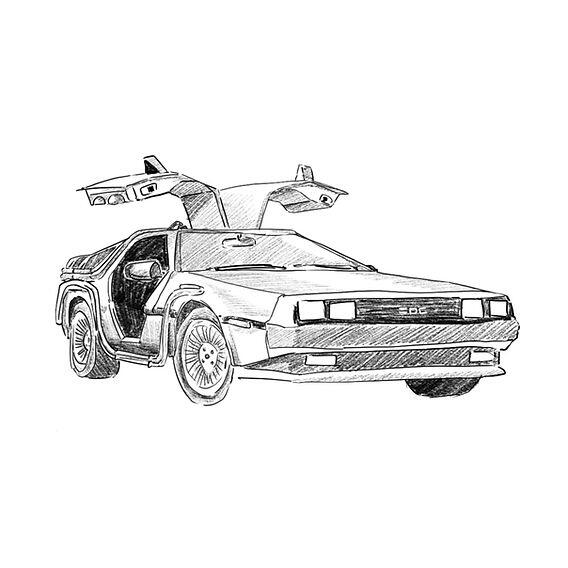
When my husband walked into the bedroom to see an image of Zadie Smith beside me on his pillow, we knew that things had gone too far. There’s devotion and then there’s obsession. But Zadie deals in words that feel as if they’re drawn straight from my soul; it’s hard not to fall in love. Harder, though, to accept that those words will never be as silken and luminous in my own hands.Teaching writing has taught me that there are no rules for writing. There is only practice. The practice of feeling the words in your body, of trusting their progress all the way to your hands. The practice of sitting down and teasing them out, again and again and again, so that slowly they coagulate to characters, who turn out to have always been there, on the sidelines, just waiting for a portal of language to open for them.They have become my children, these characters, even the half-formed and abandoned ones. They lurk at the corners of my thoughts, small sparks of being in a semi-verbal limbo. So, too, do my students, who are decidedly more fully formed, and often very verbal. Each connection, each intention, each moment of shared understanding anchors them in my daily list of ruminations. They would not like me to say it, I fear, but many of them are so very young. Even through the veil of hard-earned middle-aged wisdom I recognise the urgency, the hunger, the frustration, the apathy.‘Life,’ a friend of mine once said when we were students ourselves, ‘is huge.’ I see the same awe in my students as they’re confronted with a life beyond their formal education. I want to tell them that it’s going to be alright, that the world will carry on being huge, but that it will gradually feel a little smaller and eventually they too might one day write the book they’re carrying around inside them. That their embryonic characters might live on in other people’s minds.Life, though, isn’t a three-act structure. It’s not a narrative arc. It’s a spiralling iteration of exultant heights, mundanity, and the occasional horrible blow. I’ve known too many people die to claim that a rejection is a devastation, but even so, it hurts like fuck. And that’s the truth of writing that I can’t quite bring myself to share with my adopted student children. You are not the lead character in this story and the characters in your story are not your babies, and even so you will briefly believe that maybe both these things might reasonably be true, and then when rejection comes — as it unavoidably will — you will wonder why you do this to yourself.And then you will remember the note you found inside a book, an old copy of Ulysses that you began but never finished. Fail again, the note says, Fail Better. Good old Samuel Beckett, you’ll think, always has a useful word when you need it. And you’ll fold it back into the unread pages, for the next time the universe directs you that way. You’ll hear someone whistling in the shower: G-C-F# - the opening notes to the theme from Back to the Future. You’ll remember that there’s always another thread to pull, another line to follow. You’ll remember that at the end of the film, the DeLorean runs on garbage and doesn’t even need roads. You’ve failed, and it’s ok. Fail again. Fail better. Keep failing. Garbage and sky is all you need to keep going. So keep going.
Katy Mahood is the author of the novel Entanglement (Borough Press, 2018) which was longlisted for the Bath Novel Award. Her short fiction has been published in the Evening Standard, the Sunday Express and in a collection by The Borough Press. Her flash fiction was longlisted for the 2023 Oxford Flash Fiction Award. At UWE Bristol she supplies tea and biscuits to weary writing students and occasionally teaches them too.


Me and the Page
By Caitlin Wright
April 2nd 2024
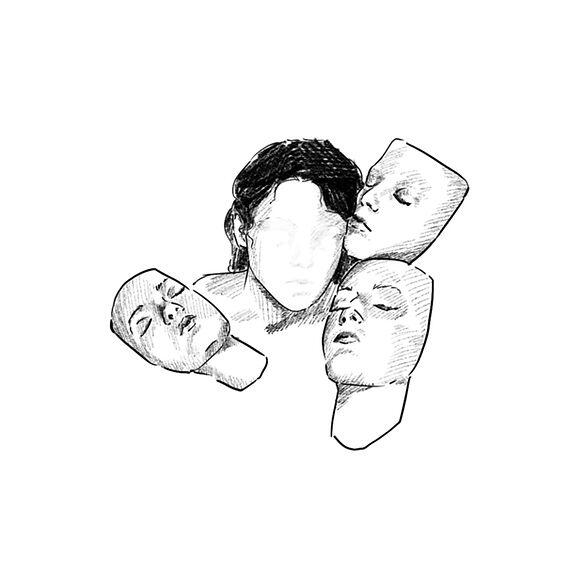
Illustration by Sky Costello-Ross
The death of my mother has made me who I am today. I would not be as independent, as mentally strong, as empathetic, or as worn. I would not strive to be a writer, a poet, an artist, or a mother myself. I would not be scared of vulnerability, have OCD, or cry at the thought of my friends dying on a Monday afternoon in the bath. I wouldn’t appreciate custard tarts or the colourful iridescence of a blackbird or force myself to get some fresh air when I’m sick. I wouldn’t be me. I used to think I would trade myself and all that I am for one more day in her arms.I ran from grief for a long time. After losing my mum, Michaela, when I was eight to a brain tumour, I had a child therapist called Doreen. The most memorable part of these therapy sessions was seeing a spider crawl around in Doreen’s nest of wiry, grey hair, and being too worried about her reaction to tell her. She made me draw where my emotions were on a stick figure. There were lots of blues and reds, for sadness and anger. No yellow for happiness. She gave me a leaflet that explained the stages of grief in a palatable way, and I pinned it to my bedroom wall. It seemed like each stage was a checkpoint, just like in Sonic, and that when I got to the seventh level, I’d finally feel normal again.Within a year, everything had been crossed off with a blue felt tip, and I was confused because I felt absolutely no different from day one. In fact, I felt worse. Life continued around me as though her absence was as normal as the bins being put out every Thursday. I assumed that I was the anomaly. Having always been a shy child, I sucked my bottom lip in whenever the tears began to well and nodded that I was fine.This attitude continued well into my teens, and I developed severe mental health issues that I felt I couldn’t approach anyone about. I’d been praised since her death for my unwavering independence. I couldn’t reveal that it was all an act when everyone was so proud of me for it. I became a master of disguises and threw myself headfirst into whatever personality I constructed for myself. The mask would, inevitably, begin to slip, and this is when I’d reinvent myself, glue together another costume to slip on top of my old one. I fluctuated from a shy social outcast to a mean popular bully to a party animal bordering on addiction and back again, multiple times. Beneath it all, I desperately needed help. I just didn’t know that I could ask for it.I drunkenly confessed these feelings to a friend at a party once, and within an hour we were staggering along the cliff path in the pitch black to my sister's house. We arrived with half-smoked cigarettes between blue fingers and masses of windswept hair. My sister held me while I cried with the force of someone vomiting on her kitchen floor. I didn’t know why I was crying, or how I was suddenly permitted to let these emotions flow freely, but I knew I was crying for every past version of myself and, above all, for my mum, who I hadn’t cried for since I was a child. Tucking me into bed, knowing that the possibility of sleep was slim, she handed me a blank sketchbook and pen in a last-ditch attempt to sway my thoughts from the darkness. By the orange glow of her desk light, I feverishly captured every essence of emotion that had passed through me. I wrote for so long that my hand cramped and I heard the birds awaken along with the bruised, winter sky. My fingers were blotched with black ink stains for days. While translating the scrawling hieroglyphics after a much-needed sleep, I realised I had created a collection of haunting poems that perfectly encapsulated my current experience. I was in complete awe that I had the power to transform the most horrific events of my life into something alluring, even beautiful.I have wanted to be a writer since I was a child. Only now do I realise the impact that writing has on my daily life. I can’t express myself authentically in any other way. When it’s just me and the page, there is no harsh judgement, no expectation of strength or stoicism. I can be honest, vulnerable and frightened, and the results are profoundly raw. Finding this power was integral to my recovery, and now, although the process is in no way linear, I am comfortable with who I am. I don’t feel a need for disguises. I’m proud that I am most content when making things with my hands. I don’t need to hide that I hate drinking and would much rather be in bed reading a book before midnight. It’s not boring that my favourite sandwich is cheese and pickle, and I don’t have to slouch my shoulders because I’m too tall to be attractive. Through my stacks and stacks of leatherbound journals, I have concluded that I am perfectly fine being who I am.There will always be an emptiness inside of me because no one ever loves you like a mother does. There is no form as pure or unconditional, and although my responses to grief may lengthen in time, my longing will never disappear. The feeling is always on the precipice of surfacing in any place, often in the least expected ways: when I hear a child scream in happiness on a swing set, when the tulips begin to bloom, when I’ve had a difficult day and my hairbrush snags in a tangle. But I know that I can hold myself. Some days, I still feel like I could give it all up, but that’s between me and the blank page. I have grown to realise that who I am now is worth a lot more than just one more day with her.
Caitlin Wright (@hwedhla) is a Cornish author who specialises in writing contemporary realism and poetry. Her upbringing in rural isolation underpins much of her work, both stylistically and thematically through themes of social, economic and cultural disparity. She holds a BA Honours degree in Creative and Professional Writing and is currently aspiring to publish her novel. In the future, Caitlin is planning to travel to enrich her experiences of the world and therefore her writing.


Nova Cookies Policy
Effective Date: 04.11.2025
1. Introduction
This Cookies Policy explains how Nova (“we”, “us”, or “our”) uses cookies and similar technologies when you visit our website https://novajournal.org/.
It tells you what cookies are, what types we use, and how you can manage your preferences.
2. What Are Cookies?
Cookies are small text files stored on your device when you visit a website. They help the website remember your actions and preferences (such as login details or language), so you don’t have to re-enter them each time you visit.
Cookies may be:
Session cookies – deleted automatically when you close your browser, or
Persistent cookies – stored on your device until they expire or are deleted.
3. How We Use Cookies
We use cookies for the following purposes:
| Type of Cookie | Purpose | Example |
|---|---|---|
| Strictly Necessary | Enable core website functionality (e.g., security, page navigation). | Session management |
| Performance / Analytics | Help us understand how visitors use our website so we can improve it. | Google Analytics |
| Functional | Remember your preferences and settings. | Language or region settings |
| Marketing | Help deliver relevant advertisements and measure campaign effectiveness. | Meta Pixel, Google Ads |
We do not use cookies to collect sensitive information such as passwords or payment details.
4. Third-Party Cookies
Some cookies on our site are set by third parties - for example, analytics or advertising partners. These providers may use cookies to collect information about your browsing activity across multiple websites.
We encourage you to review their individual privacy policies for more details.
5. Managing Your Cookie Preferences
You can control or delete cookies at any time. You can:
Adjust your browser settings to block or delete cookies, or
Use the cookie consent banner on our website to accept or reject specific types of cookies.
Please note that disabling certain cookies may affect how our website functions.
6. Updates To This Policy
We may update this Cookies Policy from time to time. The revised version will be posted on this page with an updated “Effective Date.”
7. Contact Us
If you have any questions about our use of cookies, please contact us at:
Email: [email protected]


The Love of a Brother
By Olivia Jenkins
April 2nd 2024
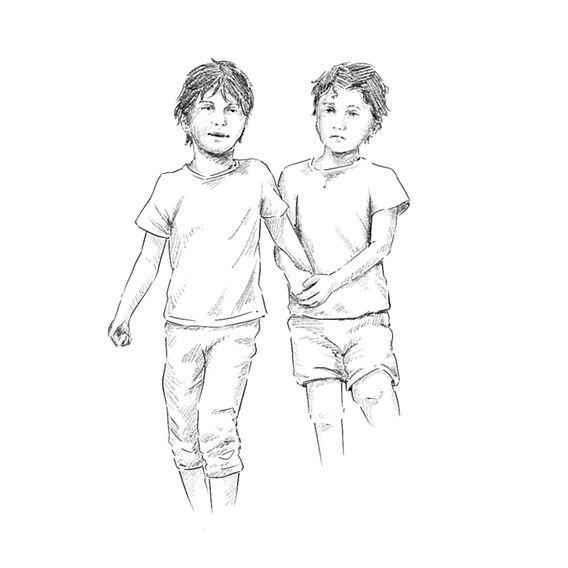
Illustration by Sky Costello-Ross
Memories make up a person. Every event, every detail of a person’s life, lodged in their brain like a tough nail or a stubborn splinter. We keep them playing on a loop: a constant reminder that we are alive.Jack, however, lived in a repeating cycle of questioning whether he was, in fact, alive. He had very little to prove that his heart was working to preserve this twenty-year-old, burdensome body. It was as if, somewhere along the way, he’d shapeshifted into a completely blank brain with no evidence of ever having lived. The hands that helped elderly women with their shopping bags didn’t feel like his own, the blue-green eyes that had witnessed the laughter of friends and the soft smiles of brothers and sisters now seemed dull and grey, and without knowledge of life’s small but meaningful pleasures.Jack was reluctant to speak. He kept himself silent until the time came when speaking was unavoidable. Speaking his mind did not come naturally. Jack was not anti-social and did not despise speaking in public places; on the contrary, he loved spending time with other people and much preferred how he was when other people were around. He thrived off other people’s energy. It was the constant questioning and worrying of whether people approved of what he said that made him more reserved.‘Jack, is it?’ the lady started, receiving just a nod from Jack. ‘Why don’t you tell us a bit about yourself?’.About myself, Jack thought. About myself, about myself, he repeated in his head, as if the mantra would somehow conjure up the memories that answered that question. This quietness could play to his advantage. He didn’t have to be the man everyone dared not look at, in fear of glimpsing what grief can do to a person.Up until this point in his life, Jack had been a replica of his older brother, although they weren’t twins. Sibling relationships are unique; no one understands a person like their brother or sister.There’s a peculiar juxtaposition with siblings. You may simultaneously want to banish them to a state of eternal suffering, yet wouldn’t hesitate to take a bullet for them. However, the connection between Jack and his brother was particularly unusual. It’s one thing to admire and copy your older sibling; it’s another to parallel their entire personality.When his brother laughed, Jack studied the way his lips moved up into his cheeks, and how his entire body leaned back as his voice bellowed with joy. When his brother was uncomfortable or scared, Jack studied the way his back slumped forward, in an attempt to shorten himself and become invisible. These habits became a ritual, until Jack could no longer recognise his own characteristics or behaviours and was practically a clone of his brother.
Jack hadn’t needed to live up to people’s expectations, because his brother was already a perfect example. For twenty years - Jack thought now - he couldn’t recall any flaws… until there came a day when Jack was left a hollow shell of a soul. Until, for the love of God, he couldn’t possibly think of an answer to a question so simple as ‘tell me about yourself?’.‘My name’s Jack.’ He coughed and shifted uncomfortably. ‘Well, I live in the city. A very pretty city, very “me”, I think.’ His eyes tried to catch onto absolutely anyone else in the room, and he grew more paranoid when the attempt to validate his answer failed.‘The city makes more aware, I think. People say it can rot your brain into an automated person, rather than a living, breathing soul… but I don’t feel I’ve been subjected to that yet.’‘How so?’ the woman asked.‘Well, I sometimes notice things; things most city people tend to overlook. The girl in front of me on the bus here: she was reading one of my favourite books. She…. She was about to finish a chapter I had re-read about six times to take in every single detail: everything there was to know. I could tell it was her first time reading it. She was engrossed and her head was barely above the page… And she didn’t care that her hair was sliding out of her bun. At one point, the bus driver started having a row with someone trying to board without paying, and not once did her eyes lift from the page. It reminded me of someone I used to know.’When Jack stopped talking, the room felt suddenly quiet to him. He thought to convince everyone that he wasn’t some eldritch stalker who had found his next intriguing victim, though he decided against it. Best not to add fuel to the fire.‘I wouldn’t. Best not to add fuel the fire,’ someone said. Jack snapped his head up to stare at the man sitting opposite him. He studied the way the man was gazing at his shoes; the way he was attending to his shoelaces instead of whatever was going on in the room; and Jack found it hard to believe he was the one who had repeated the words in his head.
‘That’s not the one you’re looking for. I’d thought you’d recognise my voice.’The rhythm of the words, paired with that coarse yet calming voice, hit Jack like an out-of-body experience. His thoughts descended into disarray. He’d hoped to hear this voice more times than one would think was possible, and thought if - by some unimaginable miracle, it happened - he would forget whatever grudge he had against religion and praise God for as long as he lived. Yet now, in this moment, witnessing the man with his own eyes standing in front of him, he was unsure whether to feel elated or horrified.As an adult, Jack could conceal his inability to understand himself enough that the general population of people he met didn’t question his existence. As a child, though, he stuck out like a sore thumb. 8-year-old Jack was incapable of making or keeping friends, and 12-year-old Jack was perpetually unsure of what he liked or wanted to do with his life. Which is why everything he ever did, he did with his brother.If his brother made a friend, it was their friend. If his brother took up a hobby, it was their hobby. There was some resentment between the two, as their parents and grandparents quite clearly preferred his brother; a perfect, handsome, sociable young man. Jack loathed him at times, but his jealousy quickly turned into a crippling desire to be just like him.Every day, when his brother’s attention was occupied, Jack would sneakily take a couple of his clothes, borrow his hair wax and style it in the same, neat updo, then spray his aftershave, and smile with the same number of teeth showing.He attended his brother’s football matches and eventually made the team, both of them scoring and assisting every single game. ‘Double trouble brothers’.There was one incident, back in high school, when his brother got a girlfriend. There was some jealousy at first, but then Jack also got a girlfriend, and felt at ease again… until the day came for his brother to meet her, and all hell broke loose.She looked exactly like his brother’s girlfriend, even down to their noses; they were pretty much identical. That’s when his brother finally lost his shit, and they didn’t speak for two months. Neither of them stayed with their girlfriends very long. Jack had cursed his brother without even knowing it; it would forever be just the two of them.Until it wasn’t.‘What’s the matter, Jack? Seen a ghost?’ The woman asked.The irony in this joke would’ve spelled Jack to the floor with laughter, had he not actually been staring into the eyes of a ghost. Jack searched for signs he was no longer amongst the living – surely he wouldn’t still feel their heart beating if it was no longer doing its job? Pulse still there, my heart is beating, I have a beating heart. I’m still warm, my body isn’t cold, I feel warm.‘Your pulse is still there, your heart is beating, you have a beating heart. You’re still warm, your body isn’t cold. You feel warm.’Jack stared at Josh. Joshua, his dead brother. He interrogated the authenticity of the man: his eyes, lips, skin, clothes, hair, and hands all seemed normal. Jack didn’t think of himself as a spiritual person, and rarely indulged in the belief of ghosts, demons, angels… But how was he supposed to rationalise this?For the past three months, Jack had been dedicated to erasing the memory of watching his brother die. But now he found himself clinging to it: torturing himself just to cling to reality. The last movement of his body, the shattering silence that weighed over everyone cursed to watch… this harrowing memory meant nothing if Jack’s twisted wish had come true. Jack let out a huff at the sick joke life had played on him.‘You’re not dead Jack, yet. Your body isn’t, at least.’ Josh paused. ‘I know you wake up with the fear of having to live another day – that you’re desperate to close your eyes. You think I haven’t been watching you?’Josh had been loved by all who looked at him, so of course everyone was grieving and falling apart. However, they all would live. They would find a part of themselves that made it worthwhile to carry on, and experience life with the memory of him.But Jack couldn’t live without his brother. There was no life without him. Any trace of his brother left in Jack himself, he’d made sure no longer existed: his family didn’t deserve two bereavements. The guilt Jack felt was almost as unbearable as the memory of him.‘Jack, I can help you. I can make all of this go away.’ Josh moved slowly towards Jack, until he was looking down at him. Then he knelt in front of him and held out his hand. It was only then that Jack noticed his brother was wearing white. It made his blue eyes welcoming and kind.‘I can fix everything. You will no longer feel empty, afraid, alone. You don’t have to steer anymore, Jack, you can let go. Hold out your hand,’ Josh whispered calmly. ‘Close your eyes and hold out your hand. Hold my hand.’Their fingertips touched, and palms melted into one. Jack felt his brother’s presence envelope his soul – not like an invasion, more like a much-needed hug.Jack knew he was finally free.‘Jack, are you alright?’ the woman asked.Josh switched his attention to the man directly opposite once again, only this time he met his gaze and locked eyes immediately. Wisps of silver painted his pupils, with wrinkles and scars to match his wisdom.‘You’ve got the most fascinating blue eyes.’Josh remained still and silent for a moment before smiling.‘Thank you.’
Olivia Jenkins (@livvjn). “My name is Liv and I'm currently a second year student at UWE studying creative writing. My love of writing actually started when I was pursuing acting. For two years I studied at the Royal Welsh College of Music and Drama, and was given the opportunity to write my own pieces. I write mostly fiction, drawing on not only my own life experiences but also those closest to me. I find it gives me a strength I never knew I had but simultaneously helps others better understand themselves through characters similar. I feel my experiences, traumas and moments travel through my work, but in a different light.”


A Spell for Moving Forward
By Anna M. Wang
April 2nd 2024
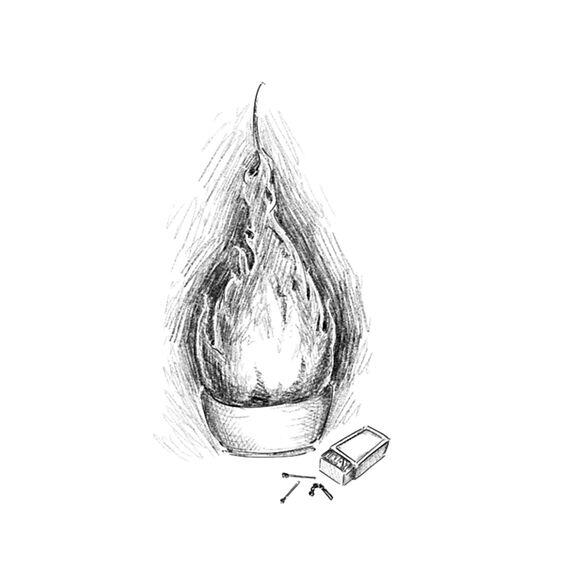
Illustration by Sky Costello-Ross
The Pieces1 peaceful room with lockable door – easy to open, not heavy or on stiff hinges
1 metal bowl
2 handfuls of wood chips
1 large and impractically shaped, damp stick – must be foraged
1 book of matches from a hotel bar – must be given freelyAcquisitionMatches
The hotel bar is dimly lit, and smells like old carpet and cheap wine. The walls are a drab cream. The bartender wears a white shirt, black waistcoat, and red tie. You perch on a stool with one short leg that makes it wobble. You pull out a cigarette, hold it in front of you and sigh, then look to see if he’s turned to face you yet.Stick
The grass in the park is flattened by slick mud. Rainwater softens everything. A dog a few metres away runs for a ball, skids, and careens into a deep puddle, standing to shake a brown mist around itself. The owner’s raincoat hood hangs forward framing their face, obscuring their periphery, blocking you out. The dog runs towards you, making a sharp turn when the owner calls it back. She sees you and smiles. You wave. She waves. She leaves. You kick at the mulch at the base of a tree as you pass, feeling something curved and solid under foot.Wood Chips
The workshop is filled with jigsaw buzz and clattering panels. One of the workers asks what you’re after, handing you a hard hat, goggles, face mask, and two thick gloves. They point you to the back. You can feel the bare concrete – cool and smooth – through the rubber soles of your boots.Bowl
His arm is around her shoulders. They’re looking at a pastel green stand mixer, on a shelf lined with an array of stand mixers in every domestic colour. She turns the pages of a pamphlet taken from the little tray on the shelf. Pasta roller, meat grinder, coconut desiccator. They take turns reading the optional attachments, debating which should go on the registry, which on the Christmas list, and which should be ignored altogether. You ask if you can squeeze past; you just need to get to the bottom shelf.Room
You come home and turn on the heating. You hear water bubble and rush through the aching pipes. You feel the glow of mess, scattered in piles around the living room, the kitchen table, the laundry basket. You pull all the stacks from your bedroom to compile on the sofa. You hold the cold doorhandle which starts to warm in your hand, because your blood still runs hot. You swing the door to test its weight and hinges, before closing it quietly and sliding the lock.ActionIn the room, clear a place on the floor and set down the bowl.
Gather your wood chips and squeeze them as tightly as you can for six seconds.
Pour them in.
Light one of your matches and drop it over them.
This should cause the wood chips to start catching, but not fully light.
If flames start growing, stir with the stick.
When the fire goes out, light another match and repeat.
Continue until you have used up every match in the book.
Wait until the chips have cooled completely. Do not leave the bowl’s side.
Once cool, take the chips in your hand and cradle them for as long as needed.
When you’re done, return them to the bowl.You are now free to go.
Anna M. Wang (@annamwang) is a Bristol-based librarian and writer. Born in Malaysia, her family moved to the UK in 2005 when she was eleven years old. She has an MA in Creative and Life Writing from Goldsmiths, University of London, specialising in flash fiction. Her novella in flash, Prodigal (2023), is available from Ad Hoc fiction and on Amazon and came runner up in the Bath Flash Fiction Novella in Flash Award (2023).


Mornings at Twenty-Two
By Beth Beales
April 2nd 2024
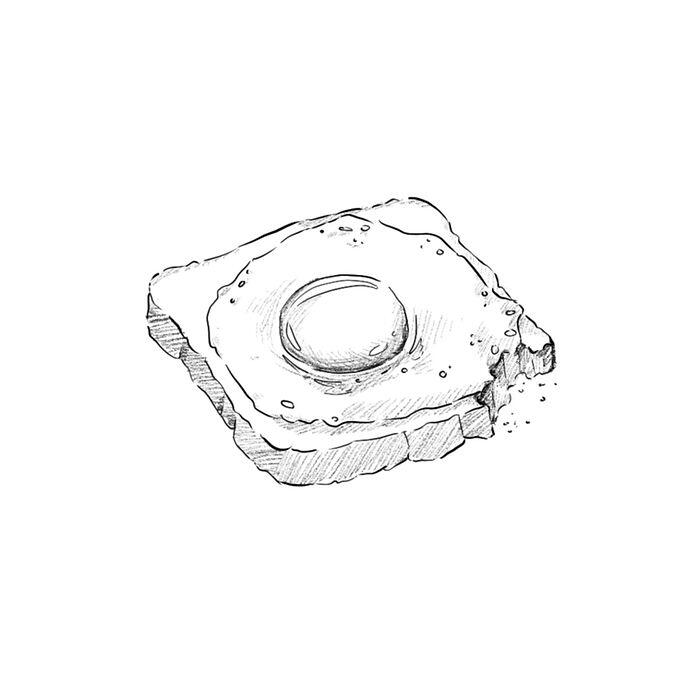
Illustration by Sky Costello-Ross
Yolks of gold turn firmer and firmer as I watch them swirl and set in the frying pan. Translucent boundaries turn to a stark white, edges crispening with a bubble and crunch. With a spatula I separate the eggs and slide them onto slices of buttered toast. Two eggs on two slices. Pinch of salt, grind of pepper. After bite one I start getting dressed. Freezing it’s fucking freezing so tights under my jeans and socks layered on top. Bra, t-shirt, a bigger t-shirt, and jumper. Cable knit, cream, a bit too thick, slightly drowning, but cosy all the same. Second bite.Brown frizzy hair with a couple of ringlets gets scrunched and clawed into a low bun. Some strands fall at the front, and I fluff them about for several minutes to make it look effortless. I start layering some creams onto my face. One for my eyes, one for everywhere, one for less wrinkles. I’m not sure I don’t have any wrinkles because it works, or because I’m twenty-two.Third bite. I start washing up the pan from earlier, there’s just enough fairy liquid left. Did I put deodorant on? Okay back to the bedroom, deodorant on and some perfume too. Neck, wrists and a spritz around my hair. I stare at myself in the mirror and my eyes glaze almost to the point of shutting. No, wake up wake up, go and make coffee. I flick the kettle on, never checking whether it’s full or not, and start some makeup while I wait but I still look half asleep. As I blink on mascara, which is running out, I wonder how much it is at the moment, flicking through my phone I find it on sale at Boots. I’ll pick one up later if I remember. I look in the mirror again. My face looks less tired, but my eyes still want to droop, droop and dro…coffee! Okay back to the kitchen and again I flick the kettle on.Fourth bite. Coffee made, black no sugar as always. I look at the clock. Fifteen minutes. Deep breath.Fifth and sixth bite. I’m back in my room, backpack growing with essentials, plus the fantasy novel I’m halfway through but isn’t getting any better. I’ll give it a few more chapters. Seventh, eighth, ninth bite. Bag packed; coffee ready to go. Hair, makeup…what am I missing…I’m dressed, I need to leave. I slide my boots onto my feet and start lacing them up. TEETH, I need to brush my teeth. Okay one last bite then…shit! Yolk dribbles down the cream jumper and onto the floor. Shit. I wrestle with a piece of kitchen roll, but it only smears that golden ooze right into the fibres of wool over my stomach. Checking the clock, I’m three minutes late. How does fifteen minutes of nearly there turn to three minutes past nowhere near? Jumper off, kitchen roll in bin, fresh jumper off the clothes airer whipped on, burgundy this time and tighter too, the cuffs still a bit damp. The layers upon layers start to become suffocating. Teeth briskly brushed, backpack on, strands of hair re-fluffed and door slammed behind me. Coffee, once again, forgotten.
Beth Beales (@beth.beales). “I’m a 23 year old writer from the South West, focusing on contemporary fiction. I love writing in cafes and libraries, anywhere that gets me out of the house and into a story. My favourite thing to do is strengthen my characters as much as possible, they all have far more interesting lives and personalities than me! I love reading any kind of love story both tragic and happily ever after and recently have picked up a lot of fantasy books. On the weekends you’ll find me knitting, charity shopping and going on muddy walks with friends or completely over-caffeinated watching a film with my cat.”


When I Walk Through the Door
By Anna M. Wang
April 2nd 2024
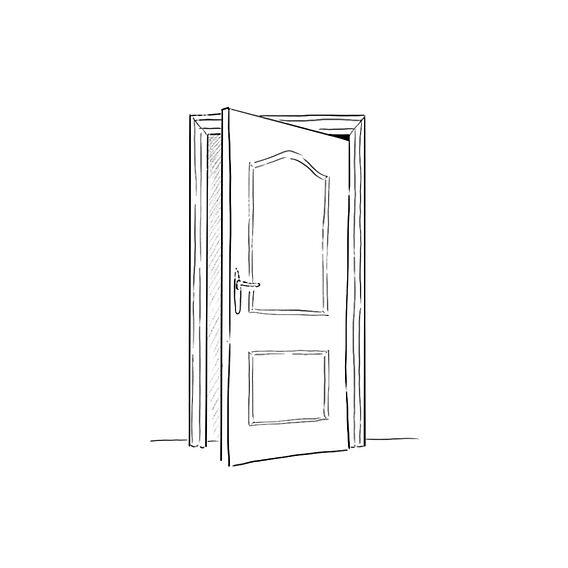
Illustration by Sky Costello-Ross
When I walk through the door, I will smile like I mean it. I will be charming and make jokes that everyone finds funny. I will be able to hear everything that everyone says to me. I will remember what I hear and who says it and what their name was and what they look like.When I walk through the door, I will speak enough to leave an impression, but not so much that I’m annoying. I will make the right amount of eye contact and naturally know what to do with my face when someone is talking. I will know where the toilets are and be able to point someone in the right direction if they ask. I will pick delicately at finger foods, and I won’t get sauce smudged on my face or seasoning dust on my fingertips.When I walk through the door, I won’t pick at the skin around my nails and chew it off. I won’t want to cry. I won’t make excuses to go somewhere else and be alone. I will be happy to be in the room with the people and the noise and chatter. I will fit in on the other side.I just need to walk through the door.
Anna M. Wang (@annamwang) is a Bristol-based librarian and writer. Born in Malaysia, her family moved to the UK in 2005 when she was eleven years old. She has an MA in Creative and Life Writing from Goldsmiths, University of London, specialising in flash fiction. Her novella in flash, Prodigal (2023), is available from Ad Hoc fiction and on Amazon and came runner up in the Bath Flash Fiction Novella in Flash Award (2023).


Small Exchange
By Corey Evans
April 2nd 2024
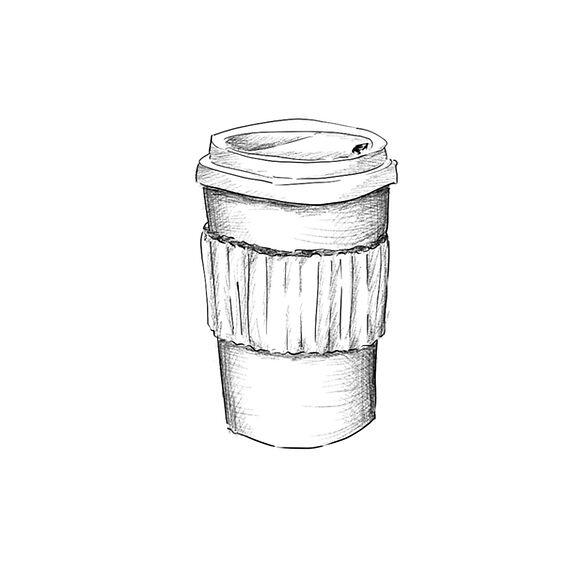
Illustration by Sky Costello-Ross
I want to change my hair. My hair has always been the same, ever since my mother gave me a parting when I was six or maybe seven. I should shave it all off. Or get a purple mohawk, that would look sick, wouldn’t it? I should buy a new car too. Or maybe just get rid of it and take up cycling, build my cardiovascular system to its peak. Optimise. My clothes? I should burn them. I never had a sense of style anyway. Shoes? Fuck them! For all I know I could be a sandal guy. I’m actually quite partial to a croc. Have you ever worn a croc? They were crafted by the gods, I swear. I need to change jobs or sack it off completely. I find myself in bed, scrolling through Facebook, looking at snapshots of other people’s lives, which seem far better than mine. They seem so happy. You know, I’ve never left this town. Not properly. I’m twenty-seven years old. That’s nearly ten thousand days stuck with these people; people who are just empty clones, mindlessly working their way through existence. What are they working for exactly? I’m sorry, but that life is not for me. I need something real, something better. The main change I need is to stop saying I’m going to change and then not following through. I think about all the stuff that floats in my head but avoid doing anything. I’ve always wanted to travel the world; see things and places I have only ever seen on screens. And now I will. I’ve bought a train ticket – to Slough. It leaves in seven minutes. I didn’t even buy a return. It’s not far and fuck knows what I’m going to do when I get there. But that’s okay, right? It’s okay to feel that way, isn’t it? Tell me it is. Please.The barista stares at him for five, six seconds, sighs, and slides a decaf americano across the counter before gesturing to the next customer.
Corey Evans (@coreyevans95_). “I’m a writer from Swansea, South Wales. I graduated from the creative writing course at UWE last year and am currently studying for a Masters at the Bristol Old Vic Theatre School. I have a passion for writing scripts, primarily for film and theatre. I’m currently developing a full length play called Splinter. A story about the fractured relationship between a mother and her son, before and after a violent act they never discuss. The play is experimental in form while exploring the themes of grief, violence, love, and trauma.”


Small Exchange
By Corey Evans
April 2nd 2024
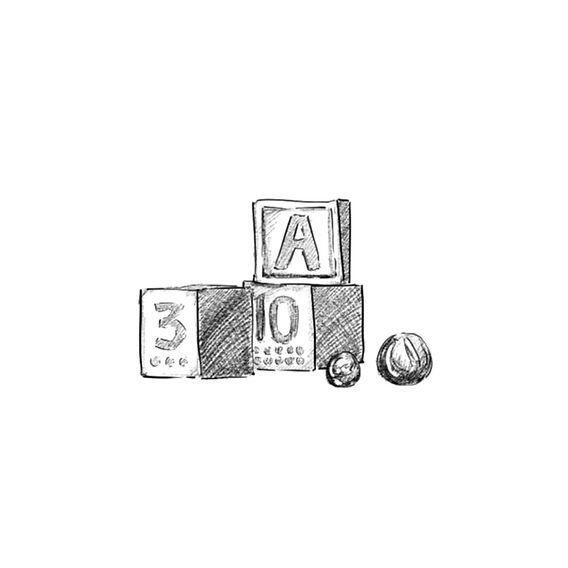
Illustration by Sky Costello-Ross
I forgot the nursery rhymes, not all,
But some.
Stories dispersed into the ether, cosmic dust.
It’s less magical than it sounds.
I forgot about the parachute game, playing mums and dads,
While trying to master it now.
I played away the fun as I pretend in reality.I don’t remember a time before delicate, tired skin,
Pre: pubescent, bleeding, lactating, stretched and scarred.
I can’t remember the name of my first favourite novel,
Life before intrusive thoughts and calories,
But I remember how I felt.I still feel that now.
Charlie Bourton (@char.liebou) is a creative and critical writer from Bristol. Originating as a poet, she now practises as an author, essayist and editor. As a proud UWE alumna, she aspires to publish an anthology of poems and flash fiction one day.


storybreaking
By Miranda Harris
April 2nd 2024
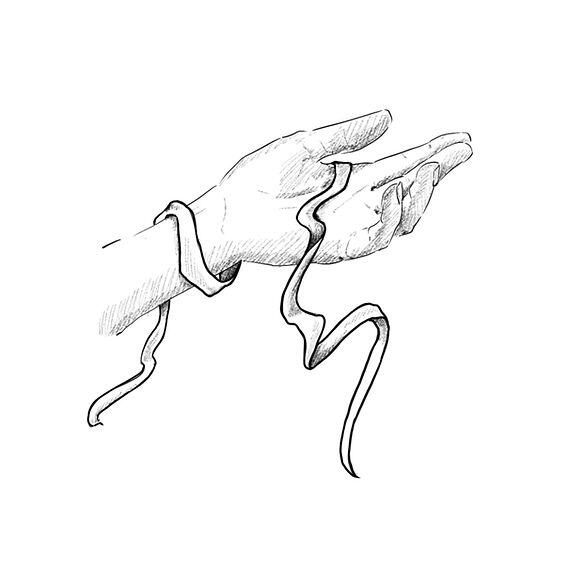
Illustration by Sky Costello-Ross
if anything could be given to you
in your untidiness, what would you make of itas you unravel, unwrite
in unbelievable, record timeat this rate there will be no memory
of any of thisif you re-roof a house you must do it quickly
before the sky gets in
Miranda Harris is a UK-based artist and writer. She makes illustrations and comics about people and places, using drawing, painting and printmaking.


Dear Heart, Some Questions
By Susan Lander
April 2nd 2024
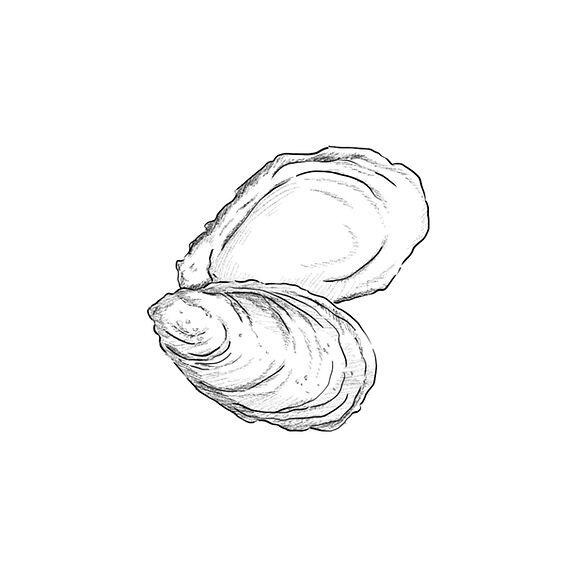
Illustration by Sky Costello-Ross
Though you are still present, here, in your chair
I ache for the absence of youYou depart, moment by day
piece by memoryAnd as your desire to fight wanes
it leaves an empty oyster shell on the shore of my heartYou are silent, gazing back over eras
to a life uniquely livedDo you think of years well explored
Or dwell on opportunities lostAnd I wonder, when this ends
will you be happy
Susan Lander worked as a nurse before turning her attention, perhaps inevitably, to writing. She is certain that nursing is much easier than writing. Patients, unlike her characters, at least largely try to behave themselves. She lives in Wiltshire with her long-suffering husband, whose unique skills include a first class honours in camouflage when she appears waving a new story, and their two delinquent cats, Tigger and Midnight. She enjoys behaving badly with friends and family and vows never to grow up, believing it to be vastly overrated.


Leaving Home
By Susan Lander
April 2nd 2024
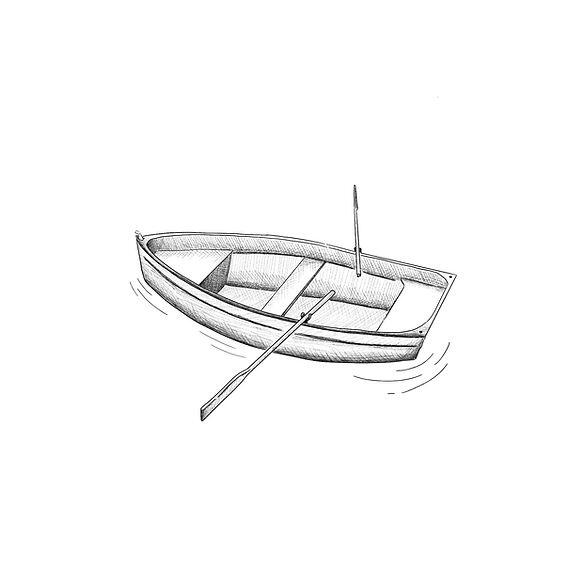
Illustration by Sky Costello-Ross
You open the door and youhesitate.A timid seafarer,
angled, unsure.
Behind you
a billowing sail
of love.Terror tries it’s best to bind you,
whispers crippling
hateful
shackles of fear.But courage
And strength
And desireYou remind yourself that you have these, and more.
So much more.So
you take that love
grip the sides of your tiny skiff
and launch.
Susan Lander worked as a nurse before turning her attention, perhaps inevitably, to writing. She is certain that nursing is much easier than writing. Patients, unlike her characters, at least largely try to behave themselves. She lives in Wiltshire with her long-suffering husband, whose unique skills include a first class honours in camouflage when she appears waving a new story, and their two delinquent cats, Tigger and Midnight. She enjoys behaving badly with friends and family and vows never to grow up, believing it to be vastly overrated.


Heritage
By Julie Primon
April 2nd 2024
Illustration by Sky Costello-Ross
She says there are easier ways to
slice an avocado: for two clean
halves run the knife through, pull
off the skin.Simple.My knife bites into nail,
nearly slices skin.
Persevering I remove the shell first,
cradle the yellow-fleshed avocado
tenderly in one palm. The
other hand runs the knife
through, soft as fingers
through a child’s hair.I see
my Italian father’s hands over
mine, dark-skinned; they dance
in my memory, ignoring the
sharp risk of the knife. Over and over
he slices, green pieces
falling soundless into salad, a
poise I cannot replicate.The next avocado will see me
attempt to emulate the grace of his
misshapen fingers, nearly lost to
curiosity at three years old.There are easier ways, she says
but I don’t care to try any of
them.
Julie Primon (@julieprimonaxtell) is a French, Cardiff-based writer. She completed a PhD in Creative and Critical Writing in 2021 from Cardiff University, for which the creative element was a historical novel set in 1940s Italy. Most recently, her short story 'Something About Weddings' was published by Honno in the collection Lipstick Eyebrows. Although she sees herself as a fiction writer first, in the last few years Julie has been experimenting with poetry and enjoys crafting personal, confessional-style work.


The Unspoken
By Caitlin Wright
April 2nd 2024
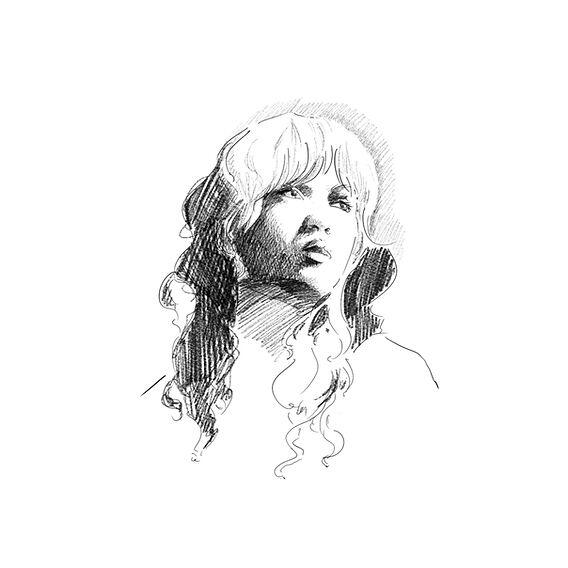
Illustration by Sky Costello-Ross
I find myself searching for it in other women,
pouring over books and films and
friends, searching for the thing one of them must
possess that will tell me yes,
it is hard to be a woman.
It wraps itself around your core and squeezes
so tight that you can’t breathe.
It sinks its tendrils into your brain and affects
everything you do or say.
It fills your shoes with a weight that pins you to the floor. But,
this is how you do it.Maybe if I had a mother I'd see it differently.
I’d watch her sing in the car and
see that she is still herself.
That being a woman doesn’t have to mean sacrificing
yourself to cultivate everyone else’s growth.
That I too can turn my head towards the sun
and enjoy its warmth,
without feeling guilt for obscuring the light.
Caitlin Wright (@hwedhla) is a Cornish author who specialises in writing contemporary realism and poetry. Her upbringing in rural isolation underpins much of her work, both stylistically and thematically through themes of social, economic and cultural disparity. She holds a BA Honours degree in Creative and Professional Writing and is currently aspiring to publish her novel. In the future, Caitlin is planning to travel to enrich her experiences of the world and therefore her writing.


The Unspoken
By Caitlin Wright
April 2nd 2024
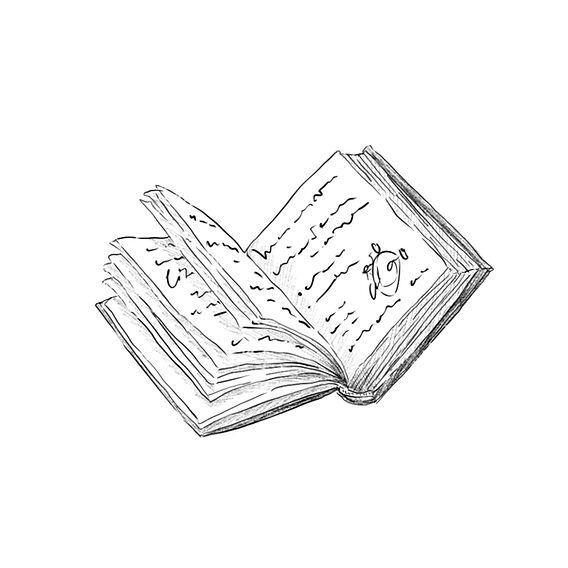
Illustration by Sky Costello-Ross
Dearbhaile Houston is an Irish writer from County Galway, whose work has been published in Banshee, The Dublin Review, The Irish Times and Tolka. Her short story ‘Credo’ was highly commended in the Short Story of the Year category for the 2021 An Post Irish Book Awards. She received an Agility Award from the Arts Council of Ireland in 2022 to complete a short story collection and in 2023 to complete a novel. She has a PhD in English Literature from Trinity College Dublin, where she currently teaches. She lives between Dublin and Montréal.In 2024, Nova sat down with Dearbhaile in Bristol and spoke to her about her writing process, publishing experiences, and her favourite writers. We followed up with a few more questions over email.Can you tell us more about your writing? What kind of stories do you write? What are the main themes and interests in your writing?I write about women, mainly. I’m interested in relationships and, in particular, notions of motherhood from the perspective of women who aren’t mothers. I’m also interested in money: not having it and wanting it. Maybe more broadly, I’m interested in anxiety – how it can be quite absurd and melodramatic as a way of viewing the world. That’s probably the thing that links all of my work, I would say.When did you start writing, and when did your work start getting published?The age I started writing properly, and not just keeping diaries and writing stories for school, was probably around seventeen. I took some evening classes in creative writing during a year out between finishing secondary school and starting university, which was a great introduction to workshopping and feedback and being in a public setting with my writing rather than keeping it hidden in a notebook or Word document. After that, I submitting and publishing stories and poems in fits and starts. I won some national writing prizes during my undergraduate and got published in student journals and some (now sadly defunct) online journals. My first print journal publication outside of student-run ones was a story in Issue Three of Banshee journal in 2016, which felt like the start of a certain kind of writing journey.What role have literary journals played in your writing life? What are the differences between them? What has it been like to work with the different editors?Literary journals have been a way of motivating myself to write, particularly when I was younger and had less time/means to write. They offered three things: a deadline; the promise of glory (ha!); and sometimes payment (ha-ha!) – the deadline being the most important of these motivations. When your work is accepted by a journal, it’s also a confidence boost; it encourages you to keep going. It can lead to things like reading at a launch or being introduced to other writers and feeling like part of a community. Working with different editors has always been enjoyable for me – I’ve not yet had a difficult time working with an editor on a story. It’s interesting to see how editors differ in their style. Some editors I’ve worked with are pretty hands-off, changing a word or shifting around commas, and others are more involved. It’s always fun when they are more involved in the process and come to you with changes and ideas because then you get to talk seriously about your writing, which doesn’t always happen, given that writing can be so solitary.A lot of writing and publishing experiences appear to be about submitting your work and dealing with rejections. Can you speak a bit about these in relation to your writing experience? Do you have any advice?Yes, rejection is just part of the game. Sometimes the writing’s not up to scratch and sometimes it’s purely pragmatic, what I think of as ‘good rejections’: lack of space, the story doesn’t fit with the issue’s theme, or the editor’s taste. The hope is that you get a yes or two interspersed between the noes to keep you going. I’m currently at a point in my writing where I’m getting almost exclusively ‘good rejections’. I haven’t had a piece of writing published since 2021 but editors love my work, just not right now! Similarly, my novel is on submission at the moment and is also getting ‘good rejections’. I think no matter what there will be fallow times when it comes to having work published and my advice is to get comfortable with that fact. Frankly, it’s a pain in the arse but there’s a huge amount of ceding control to the whole operation that happens once you send your work out. I would say there’s no point pretending the rejection doesn’t hurt, because it does, but try not to dwell on it. I like watching The Paris Review’s ‘First Time’ interviews, particularly the one with Christine Schutt, for a bit of perspective. Keep writing – it’s not over until it’s over.Can you talk more about your experiences of getting an agent, and what the relationship has been like for your writing?Getting an agent was an easier process for me than I had imagined. When I finished my short story collection, I queried one or two agents, sent the manuscript, and got the ‘thanks but no thanks’. About a month later, I was put in touch with Marianne Gunn O’Connor by an editor of a journal that had published one of my stories. From my first conversation with Marianne, I felt she understood what my writing was attempting to do and above all, she was enthusiastic about it in a way that I sometimes struggle to be. She also spoke very pragmatically about the nature of the industry, which I appreciated. Having this encouragement and know-how has been crucial for me – I wouldn’t have written the novel without Marianne’s guidance, and now in this tricky ‘on submission’ stage she’s been a great support and a necessary barrier between me and the rejections.How much does having work in literary journals change an aspiring writer's journey?Literary journals are a place to showcase your work. Editors and agents read them and actively look for new talent there. It’s not to say that you can’t pitch an agent or publishing house without previous publications: plenty of writers do this and I’m aware I’m answering this with a literary fiction bias. Publishing in literary journals is only one particular route (and not necessarily an instantaneous one) but it is one that makes your writing visible to an audience of people who might want to support your work further.You’ve written both a novel and short story collection. Do you prefer one form over the other?After thinking I’d only ever want to write short fiction, somehow writing a novel has made me love the novel. The novel gives me space to spend time with characters, flesh them out, and the space to do the thing that novels can do that short stories can’t do (or readers prefer them not to) which is be unruly and even at times pointless, or plotless.Regarding your writing, how do you document your descriptions? Do you keep notes throughout the day, or do the ideas naturally come to you when you sit down to write?It really depends. I keep notebooks, which are vital to me for keeping track of ideas and scenes, particularly for the novel, or when feeling stuck or bored. But where I am most liberated is in the Notes app on my phone. I think it’s because I tend to think about what I’m writing when I’m walking or commuting somewhere so it’s more pragmatic and – I’m sorry – less pretentious than carrying around a notebook, which feels a bit like cosplaying Joan Didion and requires a certain amount of palaver. So, it’s either in the notebook or the Notes app but everything gets put into the same Word document when I sit down to write. At which stage the ideas either flow or they don’t but having a daily and somewhat spontaneous collection, however small, of descriptions or ideas or dialogue eases the first half hour of facing the page.Your story ‘Viscera’, as well as a failing relationship, includes vivid descriptions of juxtaposed images, such as tender gestures and butchered animals. Was this stylistic choice intended to create a specific mood in the piece, and to make your readers feel a certain way?I think with a lot of these images I was trying to convey the tension in a relationship that’s just about to break. It’s not a dialogue-heavy story at all and Maeve, through whom everything is focalised, doesn’t speak to her boyfriend Dan at any point. They’re almost beyond meaningful communication so something in the story had to speak on their behalf. It’s a concise story too, in terms of word count, so the images and descriptions are all shortcuts to Maeve’s emotional reality. Realising, as Maeve does in the story, that the person you love is in love with someone else is devastating and, in this case, jarring in such a mundane way in that Maeve’s realisation has been a long time coming. That’s why a lot of these images (roast chickens, babies, raw meat, a knife) are on the face of it quite ordinary.Who are your favourite writers, and who do you feel that your work is most influenced by?An impossible question! There are writers who make me envious of their style and clarity (Anne Enright, Ayşegül Savaş, James Baldwin), who make me cry (Marilynne Robinson, Shirley Hazzard), who I feel just get it (Elif Batuman, Lisa Halliday, Lorrie Moore)…I’m leaving out so many writers. I don’t really know who my work is most influenced by – I mean, everyone and no one. It’s as much influenced by people who aren’t writers but who nonetheless use language in interesting ways – my mother and grandmother being two examples. I really gravitated towards poetry in a way I haven’t in a long time while writing the novel: Hannah Sullivan, Frank O’Hara, Jorie Graham. I think their influence can be felt in the writing more than any particular novel or prose writer.
